
Posted on Mar 12, 2026 · Updated Mar 12, 2026 · 11 min read
The Hidden Cost of Kubernetes: True K8s TCO
Eighty-two percent of container users now run Kubernetes in production, up from 66% just two years ago (CNCF 2025 Survey). But here's the number most teams don't track: compute accounts for less than half of what Kubernetes actually costs. The line items that don't show up in your cloud dashboard — people, observability, networking, storage — add another 55% on top.
This article breaks down the five real cost pillars of running Kubernetes, shows where the money actually goes, and gives you a concrete prioritization framework for cutting waste. If you've only been watching your EC2 or GKE compute bill, you're missing most of the picture. For foundational context, start with our guide on understanding Kubernetes costs.
TL;DR
Most teams track Kubernetes compute and ignore the rest. People, observability, networking, and storage add 55% more to the real bill. Average CPU utilization is just 10% — you're renting ten servers and using one (CAST AI 2025). Here's the full cost picture and what to cut first.
Table of contents
How much does Kubernetes really cost?
More than 80% of container spend is idle, according to Datadog's State of Cloud Costs report. Roughly 54% comes from cluster-level idle (overprovisioned nodes) and 29% from workload-level idle (oversized resource requests). But waste is only part of the story. The bigger surprise is where the rest of the money goes.
Most engineering teams treat "Kubernetes cost" as synonymous with "compute cost." That's like measuring the cost of owning a car by tracking only fuel. The full Kubernetes TCO breaks into five pillars, and compute — the part you can see in your cloud billing console — makes up less than half.
According to Datadog's State of Cloud Costs report, 83% of container costs are idle — split between 54% cluster-level idle from overprovisioned infrastructure and 29% workload-level idle from oversized resource requests (Datadog, 2024 ). This means the vast majority of Kubernetes compute spend goes to resources nobody is using.
So the first question isn't "how do I reduce compute costs?" It's "what am I spending on that I can't even see?" And for most teams, the answer is about $550K per million in cloud spend.
What's the waste gap in Kubernetes clusters?
Average CPU utilization across Kubernetes clusters is just 10% — down from 13% the prior year. Memory sits at 23%. That data comes from CAST AI's 2025 Kubernetes Cost Benchmark analyzing 2,100+ organizations. In plain terms: you're paying for ten CPUs and using one.
Why does utilization keep dropping? It compounds at every layer. A developer requests 2x the memory "just in case." The platform team adds a 1.5x buffer for node headroom. The autoscaler has its own thresholds. You end up provisioning 3–4x what the application actually consumes — and nobody reviews the math after deployment.
A Wozz study of 3,042 production clusters found that 68% of pods request 3–8x more memory than they actually use. And 99.94% of clusters are overprovisioned. That's not a rounding error. It's systemic.

Microservices multiply the problem. A monolith wastes resources in one place. Break it into 40 services, each with its own resource requests and limits, and you've created 40 opportunities for overprovisioning. Each service gets its own safety margin, and the aggregate waste grows with every deploy.
The $600K team nobody budgets for
The average Kubernetes platform engineer earns $199,530 per year in the US (Glassdoor 2025). A senior K8s engineer commands over $204,000. A typical three-person platform team — one senior engineer, two mid-level — costs $400K–$600K per year in salary alone, before benefits, training, or on-call compensation.
This cost never appears in your cloud bill. It sits in your HR budget, separate from infrastructure spend. But it's real, and it's often the single largest hidden cost of running Kubernetes.

Hiring is just the beginning. Kubernetes moves fast — a new minor version ships every four months. Someone has to manage upgrades, patch security vulnerabilities, maintain Helm charts, debug node-level issues, and carry the on-call pager. That's before anyone touches cost optimization.
A three-person Kubernetes platform engineering team costs between $400,000 and $600,000 annually in US salary alone, based on Glassdoor 2025 data showing average K8s platform engineer compensation at $199,530 per year. This operations cost never appears in cloud billing dashboards yet represents roughly 25% of total Kubernetes TCO.
Could you skip the dedicated team? Some organizations try. They distribute K8s operations across application teams. What usually happens: every team reinvents cluster management, nobody owns cost optimization, and you pay the platform engineering cost anyway — just spread across ten teams instead of one. And each team does it worse.
How do networking and observability inflate the bill?
Networking adds 18–30% to monthly cloud bills for organizations with 100+ services (FirstPassLab 2026). Cross-AZ traffic in a typical three-AZ Kubernetes deployment costs roughly $3,600 per year for traffic that never leaves the cloud provider. That's money for moving data between your own nodes.
Then there's observability — the meta-cost that nobody plans for. Thirty-six percent of enterprise clients spend over $1 million per year on observability tools (Gartner via Grepr AI). And 97% of organizations experience unexpected observability cost spikes (Grafana 2025 Survey).
Here's the irony nobody talks about. You need observability to find waste. But observability itself is one of the biggest hidden costs. Monitoring your overspend costs more than some of the overspend. A mid-size team running Datadog, Grafana, or a similar stack easily spends $100K–$300K per year. And over half of that goes to log storage that nobody queries.
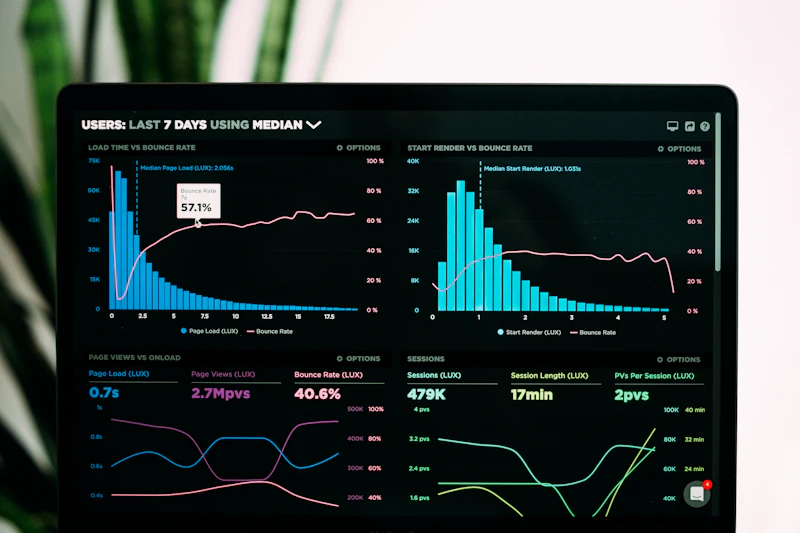
Observability costs consume an estimated 12–17% of total infrastructure budgets, with 36% of enterprise clients spending over $1 million annually on monitoring and logging tools alone. Meanwhile, 97% of organizations report unexpected spikes in observability costs (Grafana 2025), making it one of the least predictable budget items in the Kubernetes stack.
What can you do about it? Start with log retention. Most teams ship everything to their observability platform and store it for 30–90 days. Cut retention to 7–14 days for debug-level logs. Sample traces instead of collecting 100%. And use cost-aware log routing — not every log line needs to hit your $400/GB platform.
Where should you cut first?
Spot instances deliver 59–77% compute cost savings, according to CAST AI's 2025 benchmark. Partial spot adoption saves 59% on average; exclusive spot usage reaches 77%. But not every optimization is equal. Here's a prioritized framework, ordered by effort-to-impact ratio.
1. Switch to spot instances where possible
This is the single biggest lever. Spot instances are excess cloud capacity sold at a steep discount. They work well for stateless workloads, batch jobs, and any service that can tolerate interruptions with a few seconds of warning. You don't need to go all-in — even partial adoption averages 59% compute savings.
2. Rightsize pod resource requests
This is the boring one that nobody does. Look at actual CPU and memory usage over 7–14 days. Set requests to the P95 usage value. Set limits to 2x the request (or remove them for CPU). Most teams can cut resource requests by 30–50% without any impact on application performance.
3. Kill idle resources
Dev and staging namespaces that run 24/7 when nobody works on weekends. Preview environments that outlive their pull requests. Load balancers for services with zero traffic. This is pure waste, and it's the easiest to fix. Schedule non-production workloads to scale to zero outside business hours.
4. Enable autoscaling properly
HPA (Horizontal Pod Autoscaler) and VPA (Vertical Pod Autoscaler) are built into Kubernetes, yet most teams either don't use them or configure them poorly. Set HPA targets to 70% CPU utilization. Use VPA in recommendation mode before switching to auto. And don't forget cluster autoscaler — your nodes should scale down, not just up.
5. Reduce cross-AZ traffic
Kubernetes 1.33 introduced trafficDistribution for Services, which preferentially routes traffic to pods in the same availability zone. This can cut cross-AZ data transfer charges by 75–85%. It's a one-line YAML change with immediate cost impact.

Will Kubernetes costs keep growing?
By 2027, over 90% of global organizations will run containerized applications in production — up from under 40% in 2021 (Gartner). Eighty-eight percent of teams already report year-over-year TCO increases for Kubernetes (CloudMonitor 2026). Adoption is nearly universal now. Cost management isn't optional anymore.
AI workloads are amplifying the problem. GPU instances cost 10–100x more per hour than CPU instances. The margin for waste that exists with $0.10/hour CPU nodes doesn't exist with $25–35/hour GPU nodes. Every hour of idle GPU time burns cash at an order of magnitude higher than the waste most teams are used to tolerating.
The organizations that manage Kubernetes costs well don't just add another dashboard. They treat cost as a first-class metric alongside latency and error rate. They embed visibility into developer workflows. And they automate the optimizations nobody has time for manually.
For deeper dives, see our EKS vs AKS vs GKE pricing comparison and our guide to Kubernetes cost allocation.
Frequently asked questions
How much does Kubernetes cost per month?
A small production cluster (3 nodes, 1 AZ) on AWS EKS starts around $500–$1,000 per month in compute. But total cost including the EKS control plane fee ($73/month), networking, storage, and observability typically runs 2–3x the raw compute number. CAST AI's 2025 benchmark found average CPU utilization at just 10%, meaning most teams significantly overspend on compute alone.
What percentage of Kubernetes resources are wasted?
Roughly 83% of container costs are idle according to Datadog's State of Cloud Costs report — 54% from cluster-level overprovisioning and 29% from oversized pod resource requests. CAST AI's benchmark shows 90% of allocated CPU and 77% of allocated memory goes unused across 2,100+ organizations.
How much does a Kubernetes platform team cost?
A three-person K8s platform team costs $400,000–$600,000 per year in US salary (Glassdoor 2025 shows $199,530 average for K8s platform engineers). Add benefits, training, certification, and on-call compensation, and the fully-loaded cost approaches $750K–$900K. This is the single largest hidden cost for most organizations running Kubernetes.
What are the biggest hidden costs of Kubernetes?
Beyond compute: platform engineering salaries (25% of TCO), observability tools like Datadog or Grafana (12% of TCO, with 36% of enterprises spending over $1M/year per Gartner), cross-AZ networking and egress fees (10%), and persistent storage costs (8%). Combined, these non-compute costs add 55% on top of your cloud bill.
How much can Kubernetes cost optimization save?
Combining spot instances (59–77% compute savings per CAST AI 2025), pod rightsizing (30–50%), idle cleanup (20–30%), and autoscaling (15–25%) can reduce total Kubernetes costs by 40–70%. The highest-ROI first step is usually adding spot instances for stateless workloads, followed by rightsizing overprovisioned pod resource requests.
Estimate your cloud costs — for free
Compare AWS, Azure, and GCP pricing side by side with our free calculator, and dig into the guides to learn how to cut cloud waste. No sign-up required.